
Transferring a domain name from one host to another requires unlocking your domain at the current registrar, obtaining an authorization code (EPP code), initiating the transfer with your new provider, and confirming the request via email. The process typically takes 5 to 7 days to complete. This guide walks you through every step of how to transfer domain name from one host to another while keeping your website and email running without interruption.
Whether you need better hosting performance, lower costs, or improved customer support, moving your domain does not have to be complicated. The key is following a structured approach that protects your online presence throughout the transfer. By the end of this guide, you will understand exactly what steps to take, what pitfalls to avoid, and how to verify your transfer succeeded.
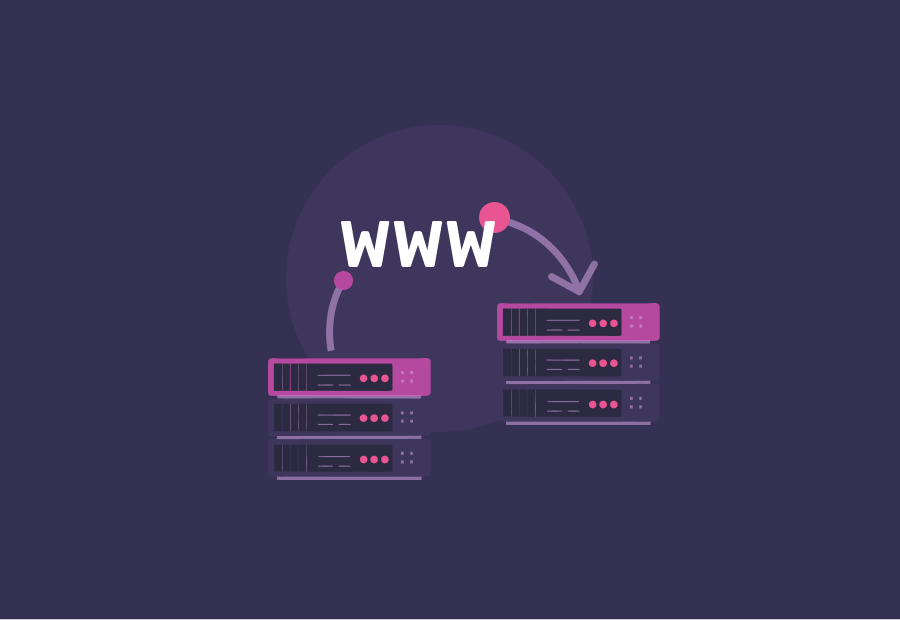
What Is a Domain Transfer?
Quick Answer: A domain transfer moves your domain name registration from one registrar (domain provider) to another while keeping your website address unchanged. The transfer process updates the administrative records that control your domain ownership without affecting your actual website files or content.
A domain transfer changes where your domain registration is managed. Your domain registrar is the company that maintains your domain records with ICANN (Internet Corporation for Assigned Names and Numbers), the global authority that coordinates domain name assignments. When you transfer, you move this registration relationship to a new company.
The transfer does not automatically move your website files, databases, or email accounts. These elements are separate from domain registration and may require additional migration steps depending on your hosting setup.
Domain Transfer vs. Website Migration
Many website owners confuse domain transfer with website migration. These are distinct processes that can be performed together or separately.
| Element | Domain Transfer | Website Migration |
| What moves | Domain registration records | Website files, databases, content |
| Who controls it | Domain registrar | Hosting provider |
| Time required | 5-7 days typically | Hours to days depending on site size |
| Technical complexity | Low to moderate | Moderate to high |
| Impact on visitors | None if done correctly | Potential brief downtime |
Understanding this distinction helps you plan appropriately. You might transfer your domain to a new registrar while keeping your website hosted elsewhere. Alternatively, you might migrate your website to new hosting while keeping your domain at its current registrar. Many people do both simultaneously when moving to a full-service provider that offers integrated domain registration and hosting services.
How to Transfer Domain Name From One Host to Another: Understanding DNS
DNS (Domain Name System) acts as the internet’s address book. DNS records tell browsers where to find your website and where to deliver your email. When transferring domains, understanding DNS is critical for avoiding downtime.
Your DNS records include several important entries. A records point your domain to your web server’s IP address. MX records direct email to your mail server. CNAME records create aliases for subdomains. TXT records store verification information for services like email authentication.
If your current registrar manages your DNS, you must either copy these records to your new registrar or point to a third-party DNS provider before transferring. Failing to preserve DNS records is the most common cause of website downtime during domain transfers.
Requirements Before You Transfer Your Domain
Quick Answer: Before starting a domain transfer, verify your domain is at least 60 days old, ensure your WHOIS contact information is accurate, confirm you have access to the registrant email address, and check that no disputes or legal holds exist on the domain.
ICANN enforces specific rules that govern all domain transfers. Meeting these requirements before starting saves time and prevents rejected transfer attempts.
The 60-Day Transfer Lock Rule
ICANN requires registrars to lock domains for 60 days following certain events. You cannot transfer your domain during this period. The lock applies after initial domain registration, after a previous transfer from another registrar, and after changes to registrant contact information (name or organization).
This rule protects domain owners from unauthorized transfers. If your domain falls within this window, you must wait until the 60-day period expires before initiating a transfer.
WHOIS Information Requirements
Your WHOIS records contain the official contact information for your domain. The registrant email address receives all transfer authorization requests. Before transferring, verify that your registrant email is current and accessible. Check that your name or organization matches your identity documents. Confirm your phone number and address are accurate.
If WHOIS privacy protection is enabled, you may need to temporarily disable it. Some registrars block transfer authorization emails when privacy services mask your contact information. Check with your current registrar about their specific requirements.
Domain Status Check
Domains have status codes that indicate their current state. Before transferring, check that your domain does not have any of these restrictive statuses.
Common status codes that prevent transfer:
- clientTransferProhibited: Domain is locked by registrar
- serverTransferProhibited: Domain is locked at registry level
- pendingDelete: Domain is scheduled for deletion
- redemptionPeriod: Domain has expired and entered grace period
You can check your domain status using a WHOIS lookup tool. Resolve any restrictive status codes before attempting to transfer.
Step-by-Step Guide: How to Transfer Domain Name From One Host to Another
Quick Answer: The domain transfer process involves eight main steps: preparing your domain, unlocking at the current registrar, obtaining the authorization code, choosing a new registrar, initiating the transfer, confirming via email, waiting for completion, and verifying success.
Follow these steps in order to ensure a smooth domain transfer experience.
Step 1: Prepare Your Domain for Transfer
Preparation prevents problems. Start by backing up your current DNS records. Log into your current registrar’s control panel and export or screenshot all DNS entries including A records, MX records, CNAME records, TXT records, and any other custom configurations.
Create a spreadsheet documenting each record type, hostname, value, and TTL (time to live) setting. This backup ensures you can recreate your DNS configuration at the new registrar if automatic migration fails.
DNS records to document:
| Record Type | Purpose | Example Value |
| A | Points domain to web server IP | 192.168.1.1 |
| AAAA | Points domain to IPv6 address | 2001:db8::1 |
| MX | Directs email to mail server | mail.example.com |
| CNAME | Creates subdomain aliases | www points to example.com |
| TXT | Verification and email authentication | v=spf1 include:_spf.google.com |
| NS | Nameserver assignments | ns1.registrar.com |
Step 2: Unlock Your Domain at the Current Registrar
Domains are locked by default to prevent unauthorized transfers. You must disable this lock before transferring. Log into your current registrar account. Navigate to domain management or domain settings. Find the domain lock, registrar lock, or transfer lock option. Change the status from locked to unlocked.
The interface varies by registrar, but the setting usually appears in security or transfer settings. Some registrars require you to confirm the unlock via email. Allow up to 24 hours for the unlock to take effect across all systems.
Step 3: Obtain Your Authorization Code (EPP Code)
The authorization code is a unique password that proves you have authority to transfer the domain. Different registrars use different names for this code: auth code, EPP code, transfer key, or authorization key.
To get your authorization code, log into your current registrar account. Navigate to domain management settings. Look for options labeled “Get Auth Code,” “Transfer Out,” or “Authorization Code.” Request the code to be sent to your registrant email address.
Some registrars display the code immediately on screen. Others email it within minutes to hours. The code is case-sensitive and typically expires after 7 to 30 days depending on your registrar.
Keep this code secure. Anyone with your domain name and authorization code can initiate a transfer.
Step 4: Choose Your New Registrar and Create an Account
Selecting the right registrar affects your long-term domain management experience. Consider pricing transparency, renewal costs, included features like WHOIS privacy and SSL certificates, DNS management tools, customer support availability, and reputation for reliability.
Once you choose a registrar, create an account if you do not already have one. Verify your email address and complete any identity verification requirements. Have your payment method ready since most registrars charge for incoming transfers, though this fee usually includes one year of registration extension.
We offer free site migration with all hosting plans, and our team can coordinate domain transfers alongside hosting moves for a seamless transition. This hands-off approach eliminates the stress of managing transfer details yourself.
Step 5: Initiate the Transfer at Your New Registrar
Log into your new registrar account. Find the domain transfer section, typically labeled “Transfer,” “Transfer In,” or “Move Domain.” Enter the domain name you want to transfer. Provide the authorization code when prompted.
Review the transfer details carefully. Confirm the correct domain name and extension. Check the transfer pricing and registration extension period. Most transfers include a mandatory one-year registration extension added to your current expiration date.
Complete the payment process. Your new registrar will submit the transfer request to your current registrar.
Step 6: Confirm the Transfer Request
Both registrars verify your authorization before completing the transfer. You will receive confirmation emails to your registrant email address.
Emails to expect:
- Transfer initiation notice from new registrar
- Transfer authorization request from current registrar
- Transfer confirmation request asking you to approve or reject
Click the approval link in the authorization email. Follow the instructions to confirm you want the transfer to proceed. Some registrars auto-approve if you take no action within 5 days. Others require explicit approval. Respond promptly to avoid delays.
Step 7: Wait for Transfer Completion
Domain transfers typically complete within 5 to 7 business days. This timeline allows both registrars to process the request and gives you time to cancel if needed.
Some registrars offer expedited transfers that complete within hours. This requires both the losing and gaining registrar to support fast transfer protocols. Check with your new registrar about accelerated options.
During the waiting period, your website and email continue working normally as long as DNS records remain unchanged. Do not modify DNS settings until the transfer completes.
Step 8: Verify Transfer Success
Once the transfer completes, you receive confirmation from your new registrar. Verify success by logging into your new registrar account and confirming the domain appears in your domain list. Check the expiration date includes the extension period. Run a WHOIS lookup to confirm the new registrar name appears. Test that your website loads correctly. Send a test email to verify email delivery.
If any issues appear, contact your new registrar’s support team immediately. Most transfer problems are easily resolved within the first 24 to 48 hours.
How to Transfer Domain Name From One Host to Another Without Downtime
Quick Answer: Avoiding downtime during domain transfer requires separating your DNS hosting from your domain registrar. Set up DNS records at your new provider or a third-party service before changing registrars. This way, your website stays online regardless of where your domain is registered.
Downtime during domain transfers usually occurs when DNS records are disrupted. Implementing the right strategy keeps your website accessible throughout the process.
Strategy 1: Use Third-Party DNS Hosting
The most reliable method separates DNS management from domain registration entirely. Services that provide DNS hosting independently allow you to manage records without depending on either registrar.
Before starting your transfer, sign up for a DNS hosting service. Import your current DNS records to the new DNS provider. Update your domain’s nameservers to point to the DNS provider. Wait 24 to 48 hours for DNS propagation to complete. Then proceed with the domain transfer.
Because your DNS is hosted separately, changing registrars has no effect on your website accessibility. Your nameservers continue pointing to the same DNS provider before, during, and after the transfer.
Strategy 2: Pre-Configure DNS at New Registrar
Many registrars allow you to set up DNS records before completing a transfer. This approach works well if you plan to use your new registrar for DNS hosting.
Start the transfer process but do not approve it yet. Access the pending transfer in your new registrar’s control panel. Configure all DNS records to match your current setup. Once records are ready, approve the transfer. Immediately update nameservers to point to your new registrar after transfer completes.
The risk with this approach is the brief window between transfer completion and nameserver propagation. Some visitors may experience brief unavailability during this transition.
Strategy 3: Lower TTL Values Before Transfer
TTL (Time To Live) settings control how long DNS resolvers cache your records. Lowering TTL before making changes reduces the propagation delay.
At least 48 hours before transferring, log into your current DNS management panel. Change TTL values for all records to 300 seconds (5 minutes). Wait for the old TTL period to expire. Proceed with your transfer. After completing the transfer and verifying everything works, restore TTL to normal values (3600 to 86400 seconds).
Lower TTL means changes propagate faster, reducing the window where different users see different DNS results.
Preserving Email During Domain Transfer
Quick Answer: Your email continues working during domain transfer as long as MX records remain unchanged. Before transferring, document your current MX records and ensure they are correctly configured at your new DNS provider. Consider setting up email with your new host before completing the migration.
Email disruption causes significant business problems. Proper planning ensures continuous email delivery.
Document Your MX Records
MX (Mail Exchanger) records tell the internet where to deliver email for your domain. Before transferring, record the exact MX configuration including server hostnames, priority values, and any associated TXT records for SPF, DKIM, or DMARC authentication.
Configure Email at Your Destination
If you are changing email providers along with your domain, set up the new email service before completing the domain transfer. Create all user accounts at the new provider. Import historical emails if needed. Configure email clients with new server settings. Test sending and receiving with a temporary domain.
Once the new email system works correctly, update MX records as part of your domain transfer process.
Use Email Forwarding as a Safety Net
Some registrars offer email forwarding that catches messages sent to your domain and forwards them to another address. Enable forwarding during the transfer period to ensure no messages are lost if DNS propagation takes longer than expected.
Our business email solutions integrate seamlessly with our hosting services. All plans include Emercury SMTP Relay for transactional emails, with full email marketing setup available on request.
Common Domain Transfer Problems and Solutions
Quick Answer: Most domain transfer issues stem from locked domains, incorrect authorization codes, expired codes, WHOIS inaccuracies, or the 60-day transfer restriction. Each problem has a straightforward solution once identified.
Understanding common problems helps you avoid or quickly resolve transfer obstacles.
Transfer Rejected: Domain Is Locked
Problem: The transfer fails because the domain has clientTransferProhibited status.
Solution: Log into your current registrar. Navigate to domain settings. Disable the domain lock or registrar lock. Wait up to 24 hours and retry the transfer.
Authorization Code Invalid
Problem: Your new registrar rejects the EPP code you provided.
Solution: Authorization codes are case-sensitive. Verify you copied the entire code without extra spaces. If the code is older than 7 days, request a new one from your current registrar. Some registrars regenerate codes when requested, invalidating previous codes.
No Transfer Authorization Email Received
Problem: You initiated the transfer but never received the confirmation email.
Solution: Check your spam and junk folders. Verify the registrant email in WHOIS is correct and accessible. If WHOIS privacy is enabled, temporarily disable it and request the email again. Contact your current registrar to resend the authorization email.
Transfer Stuck in Pending Status
Problem: The transfer has been pending for more than 7 days.
Solution: Check for any unapproved authorization requests in your email. Contact your current registrar to confirm they are not blocking the transfer. Verify no administrative holds exist on the domain. Some registrars require you to explicitly release the domain.
60-Day Lock Blocking Transfer
Problem: You cannot transfer because of the ICANN 60-day restriction.
Solution: Wait until the lock period expires. Use the WHOIS lookup to find your domain’s creation or last transfer date. Add 60 days to determine when transfer becomes available.
Transfer Timeline and What to Expect
Quick Answer: A standard domain transfer takes 5 to 7 business days. Expedited transfers may complete in under 24 hours if both registrars support fast transfer protocols. The timeline includes processing periods for both registrars plus mandatory waiting periods.
Day-by-Day Transfer Timeline
| Day | Activity |
| Day 1 | Unlock domain, obtain authorization code, initiate transfer |
| Day 1-2 | New registrar submits transfer request |
| Day 2-3 | Current registrar sends authorization request email |
| Day 3-4 | You confirm the transfer request |
| Day 4-7 | Registrars process the transfer |
| Day 7+ | Transfer completes, domain appears at new registrar |
Speeding Up Your Transfer
Some registrar combinations support expedited transfers. Contact your new registrar about fast transfer options. Respond immediately to all authorization emails. Monitor your spam folder for time-sensitive messages.
If your current registrar offers manual approval of outgoing transfers, contact their support to expedite release. Some registrars process immediate release when requested directly.
Cost of Domain Transfer
Quick Answer: Domain transfer fees typically range from $8 to $15 for common extensions like .com, .net, and .org. The transfer fee almost always includes a one-year registration extension added to your current expiration date. Some registrars offer free transfers as promotional incentives.
What You Pay For
Transfer pricing usually bundles the transfer processing fee with a required one-year registration renewal. You are not paying twice; you are extending your domain registration while changing providers.
Typical costs by domain extension:
| Extension | Transfer Cost | What Is Included |
| .com | $9-$15 | Transfer + 1 year renewal |
| .net | $10-$15 | Transfer + 1 year renewal |
| .org | $10-$15 | Transfer + 1 year renewal |
| .io | $35-$60 | Transfer + 1 year renewal |
| .co | $25-$35 | Transfer + 1 year renewal |
Hidden Costs to Watch
Some registrars charge separately for WHOIS privacy protection. Others have higher renewal rates after the first year. Read the terms carefully before completing your transfer.
Our hosting plans include free SSL certificates, and most plans include first-year domain privacy. We display both promotional and renewal pricing upfront so you know exactly what to expect.
Special Considerations for Different Domain Types
Transferring WordPress Domains
If your WordPress site uses hosting provided by your current registrar, you need both a domain transfer and a website migration. Complete the website migration first, then transfer the domain. This sequence ensures your site is running at the new location before DNS changes take effect.
We specialize in WordPress hosting with free migration services. Our team handles the complete process, moving your WordPress files, database, and coordinating domain transfers in a sequence that eliminates downtime.
Transferring eCommerce Domains
Online stores have additional considerations. Payment gateway integrations may require domain verification. SSL certificates must remain valid during transfer. Order notification emails must continue flowing.
Plan your transfer during low-traffic periods. Coordinate with your payment processor about any required domain verification updates. Verify SSL certificate status at your new host before completing the transfer.
Our WooCommerce hosting features optimized checkout performance and database tuning for product catalogs. Our infrastructure handles traffic spikes during sales events while maintaining the security required for payment processing.
Country Code Domain Transfers (.uk, .de, .ca)
Country code top-level domains (ccTLDs) often have unique transfer requirements. UK domains (.uk, .co.uk) use IPS tags instead of EPP codes. German domains (.de) may require identity verification. Canadian domains (.ca) have residency requirements.
Research the specific requirements for your domain extension before starting the transfer process. Contact both registrars to confirm they support your domain type.
After the Transfer: Post-Transfer Checklist
Quick Answer: After your domain transfer completes, verify DNS records are correct, test website functionality, confirm email delivery, enable WHOIS privacy if desired, set up auto-renewal, and document your new account credentials.
Immediate Post-Transfer Verification
Within 24 hours of transfer completion, verify all website pages load correctly. Test contact forms and other interactive features. Send test emails to and from your domain addresses. Check that SSL certificates remain valid. Verify payment processing if applicable.
DNS Configuration
If you changed DNS providers during the transfer, confirm all records migrated correctly. Use online DNS lookup tools to verify A records, MX records, and other entries resolve to the correct values.
Security Setup
Enable WHOIS privacy to protect your contact information from public databases. Set up two-factor authentication on your new registrar account. Configure auto-renewal to prevent accidental domain expiration. Document your login credentials securely.
Final Steps
Cancel any remaining services at your old registrar to avoid unnecessary charges. Update any services that referenced your old registrar’s DNS servers. Inform your team about the new domain management location.
Why Transfer Your Domain to a Full-Service Provider
Managing domains, hosting, email, and website development through separate providers creates complexity. Every service integration requires coordination. Support issues bounce between companies. Billing happens on multiple cycles.
Full-service providers simplify operations by consolidating everything under one account. Your domain registration, DNS management, web hosting, and business email all live in one place with one support team.
Benefits of Consolidated Services
Single point of contact: One support team understands your entire setup. No more explaining your configuration to multiple companies.
Integrated billing: One invoice covers all services. No surprise charges from forgotten accounts.
Coordinated updates: Domain renewals, SSL certificates, and hosting all renew together. Nothing falls through the cracks.
Faster problem resolution: When issues arise, the team can investigate across all systems without waiting for other providers.
Expert migration support: Moving to Prestige Technologies includes free migration assistance. Their team handles the technical work while you focus on your business.
We offer managed hosting with servers tuned for WordPress and WooCommerce, built-in caching for fast load times, and 24/7 chat support from real people. Our free migration service moves your site with zero downtime, eliminating the stress of managing the transfer yourself.
Conclusion
Transferring your domain from one host to another follows a predictable process. Unlock your domain, get your authorization code, initiate the transfer, confirm via email, and wait for completion. The entire process typically takes 5 to 7 days.
Success depends on preparation. Back up your DNS records before starting. Verify your WHOIS information is accurate. Respond promptly to authorization emails. Use strategies like third-party DNS or pre-configured records to avoid downtime.
Understanding how to transfer domain name from one host to another empowers you to choose the best provider for your needs. When you are ready to make the move, we offer free migration services, expert support, and integrated hosting solutions that simplify domain management. Contact our team today to discuss your transfer and discover how our all-in-one approach can support your online success.
Frequently Asked Questions
1. How long does it take to transfer a domain name from one host to another? A standard domain transfer takes 5 to 7 business days. This timeline includes processing time at both registrars and mandatory waiting periods required by ICANN. Some registrar combinations support expedited transfers that complete within 24 hours when both parties approve immediately.
2. What is an EPP code and where do I find it? An EPP code (also called authorization code, auth code, or transfer key) is a unique password assigned to your domain that authorizes transfer. Find it by logging into your current registrar’s control panel, navigating to domain settings, and requesting the code. It will be displayed on screen or emailed to your registrant email address.
3. Is it free to transfer a domain to another registrar? Most registrars charge a transfer fee ranging from $8 to $15 for common extensions like .com. This fee typically includes a one-year registration extension added to your current expiration date. Some registrars offer free incoming transfers as promotional incentives.
4. Will my website go down during a domain transfer? Your website will not go down if you properly manage DNS records during the transfer. The domain transfer itself does not affect DNS settings. Downtime occurs only when DNS records are disrupted or deleted. Use third-party DNS hosting or pre-configure records at your new registrar to ensure continuous availability.
5. Can I transfer my domain if it expires soon? You can transfer a domain that is close to expiration, but avoid transferring during the final 15 days before expiration. If your domain expires during transfer, complications may arise. The transfer itself adds one year to your registration, so transferring before expiration extends your coverage without needing a separate renewal.
6. Why is my domain transfer being rejected? Common rejection reasons include a locked domain (disable the registrar lock), invalid or expired authorization code (request a new one), incorrect WHOIS information (update your contact details), the 60-day transfer lock (wait until it expires), or WHOIS privacy blocking authorization emails (temporarily disable privacy).
7. Will I lose my emails if I transfer my domain? You will not lose emails if MX records remain correctly configured. Before transferring, document your MX records and ensure they are set up at your new DNS provider. Email continues flowing normally as long as the MX records point to your mail server.
8. What is the 60-day domain transfer lock? ICANN requires registrars to lock domains for 60 days after initial registration, after a previous transfer, or after changes to registrant contact information. During this period, you cannot transfer the domain to another registrar. This rule prevents domain theft.
9. How do I unlock my domain for transfer? Log into your current registrar’s account, navigate to domain management or security settings, and find the domain lock or registrar lock option. Change the status from locked to unlocked. Some registrars require email confirmation. Allow up to 24 hours for the change to take effect.
10. What DNS records do I need to backup before transferring? Back up all DNS records including A records (website IP address), AAAA records (IPv6 address), MX records (email routing), CNAME records (subdomain aliases), TXT records (SPF, DKIM, DMARC, and verification entries), and NS records (nameserver assignments). Document each record’s type, hostname, value, and TTL setting.
11. Can I transfer my domain to any registrar I want? You can transfer to any ICANN-accredited registrar that supports your domain extension. Some country code domains (.uk, .de, .ca) have specific requirements or limited registrar options. Verify the new registrar supports your domain type before starting the transfer.
12. What happens to my website during a domain transfer? Your website continues functioning normally during the transfer as long as DNS records remain unchanged. The domain transfer only moves registration records, not website files or DNS settings. Your site remains accessible at the same address throughout the process.
13. How do I transfer my domain without downtime? Avoid downtime by separating DNS management from domain registration. Set up your DNS records at a third-party DNS provider or pre-configure them at your new registrar before completing the transfer. Lower TTL values 48 hours before making changes to speed propagation.
14. What is the difference between domain transfer and website migration? Domain transfer moves your domain registration from one registrar to another. Website migration moves your website files, databases, and content from one hosting server to another. These are separate processes that can be performed independently or together.
15. Can I cancel a domain transfer after it starts? You can cancel most transfers before final approval. Contact both registrars to halt the process. After you approve the transfer via email, cancellation becomes difficult or impossible. Some registrars allow cancellation within a short window after approval.
16. How do I know if my domain transfer was successful? Verify success by logging into your new registrar account to confirm the domain appears in your domain list. Run a WHOIS lookup to verify the new registrar name. Check that your website loads correctly and email delivery works. Your new registrar will also send a confirmation email upon completion.
17. Do I need to renew my domain before transferring it? You do not need to renew before transferring. Most transfers include a mandatory one-year registration extension added to your current expiration date. Transferring effectively combines the transfer fee with a renewal, extending your registration without separate payment.
18. What is WHOIS privacy and should I enable it after transfer? WHOIS privacy replaces your personal contact information in public domain records with proxy information from your registrar. This protects against spam, identity theft, and unwanted solicitation. Enable it after your transfer completes for better privacy protection.
19. Can I transfer an expired domain? You cannot transfer an expired domain. If your domain has expired, you must first renew it with your current registrar before initiating a transfer. Once renewed and active, you can proceed with the standard transfer process after waiting any applicable lock periods.
20. What should I do if my authorization code does not work? If your authorization code fails, verify you copied it exactly with correct capitalization and no extra spaces. Check if the code has expired (codes typically last 7 to 30 days). Request a fresh code from your current registrar. If problems persist, contact both registrars’ support teams for assistance.